Interview to coordinators of SIG55
Advanced Numerical Methods for Scale-Resolving Simulations
Francesc Xavier Trias
Heat and Mass Transfer Technological Center, Universitat Politècnica de Catalunya · BarcelonaTech
Francesco Capuano
Department of Fluid Mechanics, Universitat Politècnica de Catalunya · BarcelonaTech
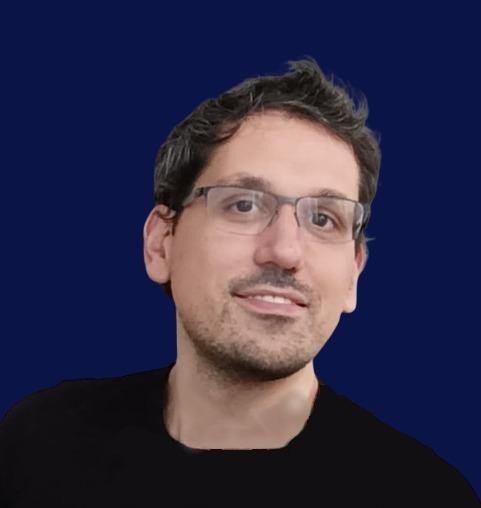
Francesco Capuano
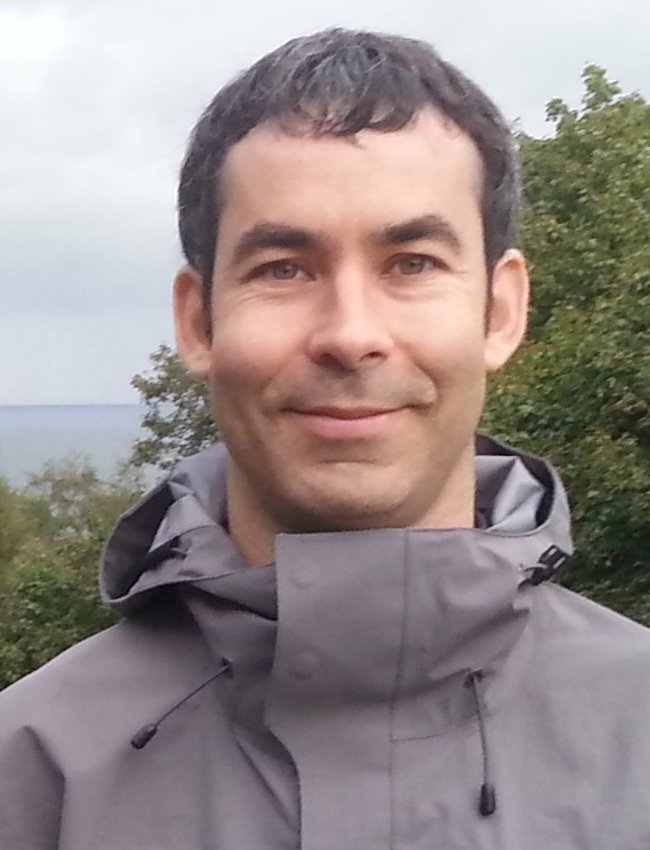
Francesc Xavier Trias
1. What are the objectives of your SIG?
Our goal is to contribute to what is often referred to as “next-generation CFD”: more reliable, predictive, and efficient simulation tools for complex multi-scale and multi-physics flows. A central focus is on structure-preserving discretizations (methods that mimic continuous properties at the discrete level), and on establishing a clearer common language and taxonomy across methods.
The SIG brings together different communities, spanning both high- and low-order approaches. We aim at encouraging exchange and comparison, and to promote open-source implementations that can support both research and applications, including in industrial contexts.
2. How do you collaborate among the participants your SIG?
We combine regular coordination with broader community engagement. A bimonthly meeting between with the Steering Committee is used to define priorities and monitor ongoing activities, complemented by more focused meetings when needed. We also use an instant messaging platform to support day-to-day communication.
For the wider community, we plan to circulate a newsletter to all participants and interested observers with updates on activities and opportunities. We also place strong emphasis on scientific events: the NUM-SCARS workshop series (planned biennially), minisymposia at major conferences such as ETMM and ECCOMAS, and a planned seminar series to encourage broader and more continuous participation.
3. What activities have you conducted in the last year?
Over the past year, the SIG has mostly focused on building both scientific momentum and community structure. Key activities include:
- the preparation and submission of a COST Action proposal on “next-generation CFD”;
- the organization of a minisymposium at ETMM-15;
- the first edition of the NUM-SCARS workshop (CWI, Amsterdam), with around 60 participants. The format emphasized interaction, with overview talks, keynote lectures, and roundtable discussions aimed at identifying common challenges and perspectives;
- the organization of a minisymposium at the upcoming WCCM–ECCOMAS Congress, as a continuation of these discussions, which attracted around 30 contributions;
- the preparation of an ERCOFTAC Bulletin issue (March 2025), gathering contributions that reflect the range of approaches within the SIG and highlight structure-preserving methods across different discretization frameworks, as well as related open-source developments.
4. What plans do you have for the coming years?
Our plans are structured along three main directions.
First, we aim to develop a set of CFD benchmarks with emphasis on structure-preserving properties, multiphysics, and turbulence. The objective is to create a shared platform for systematic cost–accuracy comparisons across methods.
Second, we are exploring joint research initiatives, including a Marie Skłodowska-Curie Doctoral Network and a Horizon Europe proposal.
Third, we plan to strengthen interactions with other SIGs. Given the transversal nature of the topic, there are clear opportunities for collaboration, for example with SIG1 (LES) on turbulence benchmarks, or with data-driven initiatives (SIG54) by providing high-fidelity datasets that can support machine learning developments.
5. What are you most proud of within your SIG?
One positive outcome so far has been the interaction between communities that do not always overlap. Bringing together different perspectives (in terms of methods, priorities, and applications) has led to constructive discussions and helped clarify common ground as well as open questions.
 Pilot
Pilot Special Interest
 Knowledge
 ERCOFTAC